
Currently Empty: SGD $0.00
Being an Authentic Therapist: Cultivating Congruence, Intuition, and Professional Resilience
While therapists and counsellors are deeply dedicated to supporting clients through life’s challenges, the pressure to adopt a “perfect professional” facade, or to rely on defensive stances (such as detached care or over-responsibility), can inhibit the essential humanity and self-acceptance required for effective work.
- Gwen Koh
- Trauma

Prefer to learn at your own time?
Try our e-Course.
Try our e-Course.
- Course Overview
While therapists and counsellors are deeply dedicated to supporting clients through life’s challenges, the pressure to adopt a “perfect professional” facade, or to rely on defensive stances (such as detached care or over-responsibility), can inhibit the essential humanity and self-acceptance required for effective work. This lack of congruence compromises genuine therapeutic exchanges, leading to professional disconnection and burnout.
Authenticity is essential: embracing the unique self, accepting vulnerability, and trusting one’s intuition allows the therapist to model humanity and self-compassion. This fosters relational equality, inspires client growth, prevents burnout, and actively boosts professional resilience and thriving in practice.
This one-day experiential workshop equips care professionals with practical tools to cultivate authenticity. It centres on Virginia Satir’s congruence model and Iceberg framework to facilitate inner exploration and self-acceptance. Daniel Siegel’s insights on empathic resonance and interconnectivity are used to enhance mutual understanding. Crucially, HeartMath’s coherence training provides emotional regulation skills that amplify resilience.
Through immersive activities, participants will develop the trainable skills necessary to align their inner world with their professional practice, significantly boosting personal growth and clinical effectiveness. As Carl Rogers stated in On Becoming a Person (1961), “The curious paradox is that when I accept myself just as I am, then I can change,” underscoring self-acceptance as the continuous path to authentic therapy.
By the end of this workshop, participants will be equipped to:
- Value Clinical Uniqueness: Cultivate self-acceptance as the key to enhancing clinical intuition and connecting with the core self, utilizing Satir’s congruence model and Siegel’s empathic resonance.
- Develop Deep Self-Awareness: Utilize Satir’s Iceberg Model to map internal layers (emotions, perceptions, yearnings, Self) and identify cues of incongruence, including those signalling over-responsibility or detached care.
- Mitigate Countertransference: Identify subtle signs of countertransference, such as reactivity, detachment, or dissonance, and understand their impact on congruence and client trust.
- Foster Self-Regulation Skills: Apply practical skills, including HeartMath coherence techniques and Self explorations, to foster inner alignment, intuition, and co-regulation.
- Strengthen Therapeutic Presence: Enhance presence through embodied self-awareness, boosting personal resilience and modelling vulnerability to support client growth.
- Sustain Ethical Practice: Reflect on cultural and systemic influences on authenticity, committing to a practice that thoughtfully balances self-acceptance, ethics, and ongoing professional growth.
Course Duration: 7 hours
- What Others Say?
Posted onTrustindex verifies that the original source of the review is Google. I’ve attended several courses with Orego and have been consistently impressed by the quality of their training. The content is clear, focused, and highly relevant to the local Singapore context. The trainers share many practical and actionable strategies that can be applied immediately at work. I also appreciate that the course durations are well-balanced — long enough to cover key concepts yet concise and engaging throughout. The availability of self-paced online courses is an added bonus, offering great flexibility for busy professionals. Paul is very friendly, personable and never fails to ensure that participants' training experiences are not compromised.Posted onTrustindex verifies that the original source of the review is Google. Attended several courses by Orego. Dr Paul is very hospitable and warm in his receptions and always giving us yummy snacks. Location is often central and good. Trainer Gwen Koh explains concepts on trauma clearly, backed by many case examples from her wealth of experiences. The training sessions are often filled with fun-filled activities. The courses are suitable for wide range of audience.Posted onTrustindex verifies that the original source of the review is Google. A nice and friendly organization, we are well treated with tea and lunch. Thank youPosted onTrustindex verifies that the original source of the review is Google. The course is very useful. Provided a good understanding of ASD and practical tips & strategies.Posted onTrustindex verifies that the original source of the review is Google. Thank you for Ruth for the insightful sharing. The case studies and examples illustrate the key points well. Perhaps you could include some useful references (research papers and books), resources (guide books, apps, IT resources) as well.Posted onTrustindex verifies that the original source of the review is Google. Very informative and helpful to my work as a counsellor. Paul Goh is responsive and this course is skillsfutures claimable as well. Smooth registration process. Will recommend.Posted onTrustindex verifies that the original source of the review is Google. Easy-to-follow activities, strong introductory content great for those new to the field, practical strategies for working with children. Covers play therapy fundamentals, therapeutic powers of play, expressive arts, and practical applicationsPosted onTrustindex verifies that the original source of the review is Google. The full-day workshop on “Working with Children Using Play and Creative Arts Therapy” was both insightful and engaging. It resonated strongly with me, as I am seeking to build and nurture meaningful connections with my four grandsons during their formative years. The introduction to play therapy provided me with practical strategies and a valuable framework that I can apply in my interactions with them.Posted onTrustindex verifies that the original source of the review is Google. Attended working with children using play and creative arts therapy. Personally felt the workshop was quite intense in a day, maybe because i need time to process and digest before I can move on to the next segment haha Regardless, the entire play therapy knowledge and activities were super insightful and i like how it emphasises play therapy is a process and it takes time. Shows compassion, strength and patience which the society lacks now. Jeanie was super real and candid, sharing real life cases and experiences to enhance learning on how play therapy works. Thank you so much Paul and Jeanie for the workshop! 💕
- Course Topics
I. Exploring Authenticity: Mapping Inner Patterns
Congruence and Defensive Stances: Examining how internal states, such as over-caring, over-responsibility, detached care, or an unconscious “Savior” script, affect effectiveness, using Satir’s congruence model and Siegel’s interconnectivity to uncover inauthentic patterns.
The Iceberg Model for Self-Acceptance: Introducing and utilizing Satir’s Iceberg Model to map deeper layers of experience, revealing cues that enhance self-awareness and connection with the Authentic Self.
Noticing Internal Signals: Engaging in reflective exercises to recognize signs of inauthenticity (somatic tension, emotional shifts, relational gaps), fostering self-acceptance and crucial learning moments.
II. Building Congruence: Intuition, Resonance, and Regulation
Aligning the Self: Building skills to align the inner Self with external actions, drawing on Satir’s congruence and Siegel’s empathic resonance to amplify intuition and mutual connection.
Emotional Stabilization: Practicing HeartMath coherence techniques to regulate emotions, stabilizing the Self to mitigate countertransference and support resilience.
Presence and Shared Understanding: Exploring how congruent presence, rooted in the Self, fosters co-regulation and self-compassion, and using immersive activities to strengthen therapeutic alliances through shared understanding.
III. Embodying Authenticity: Growth and Professional Resilience
Integrating the Authentic Self: Developing somatic self-regulation skills to sustain the Self’s presence and manage emotional demands, enhancing personal growth and integrating unique clinician strengths.
Sustaining Professional Integrity: Reflecting on cultural and systemic influences, crafting a personal plan to maintain the Self as a resilient foundation for client work, fostering continuous learning and ethical care.
- Trainer Profile
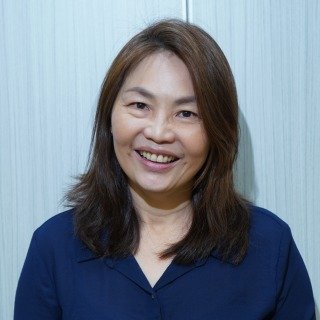
Gwen Koh
Ms Gwen Koh is a well-regarded social service practitioner who has amassed more than 25 years of frontline and supervisory practice. She holds a Bachelor degree in Social Work from the National University of Singapore and a Masters degree in Social Work from Melbourne University, Australia. Gwen is also trained in Identity Oriented Psychotrauma Theory (IoPT), EMDR, among other professional trainings.Having rose up the ranks beginning as a Youth Worker, Gwen is well-acquainted with the structure and the challenges of the local social work scene. She is currently dividing her time running her own private practice as well as serving as the Principal Social Worker in a charity running residential care, fostering service, respite care, youth outreach, adventure therapy and clinical intervention where she supervises younger colleagues. Gwen has served and supported children, adolescents and adults through individual, group, couple/marital and systemic family interventions. Gwen is adept in experiential therapeutic work with clients especially in companioning with them to unravel their strengths and resources, thereby support them towards healing, transformation and growth. Her specialties include working with individuals in dealing with anxieties, trauma, major life transitions, grief and relational challenges.
Available Funding

NTUC UTAP: NTUC union members enjoy 50% unfunded course fee support, capped at $250 or $500 (aged 40 years old and above)
- Target Audience
This course is designed for care professionals—including Social Workers, Counsellors, Youth Workers, and others in helping professions—who are committed to continuous self-development and building resilience to thrive in practice. It is ideal for those seeking to cultivate a genuine presence, embrace their unique clinical self, and align their professional practice with their core humanity.