
Currently Empty: SGD $0.00
Healing Attachment Trauma: A Trauma-Informed Approach
This course provides an experiential learning journey into trauma-informed practices. You are invited to embark on an interactive and hands-on exploration of trauma-informed practices that will arm professionals with essential tools to effectively support individuals with adverse childhood experiences and complex trauma histories.
- Gwen Koh
- Trauma
Prefer to learn at your own time?
Try our e-Course.
Try our e-Course.
- Course Overview
Attachment trauma—rooted in early relational ruptures and unmet emotional needs—can deeply affect an individual’s capacity to trust, self-regulate, and build safe, secure relationships. In children, it may show up as behavioural challenges or affect dysregulation; in adults, as relational difficulties, mistrust, emotional volatility, or internalised shame.
This one-day experiential workshop offers care providers practical, trauma-informed strategies to recognize and respond to these relational injuries. Grounded in attachment theory, affect regulation, and body-based resourcing, the course draws on the foundational work of John Bowlby and Allan Schore, alongside clinical insights from polyvagal theory, sensorimotor psychotherapy, inner child work, and EMDR-inspired practices.
Participants will explore attachment strategies as survival responses, learn to identify signs of affective and relational fragmentation, and begin applying tools to co-create safety and emotional stability. Emphasis is placed on the therapeutic relationship as a secure base—supporting clients while also honouring the complexity of their lived experiences.
This training is an accessible and grounded entry point into working with attachment trauma. It does not offer specialist treatment protocols but instead cultivates foundational skills, relational attunement, and trauma-sensitive awareness essential for longer-term support and healing.
By the end of this one-day course, participants will be able to:
- Understand the impact of attachment disruption trauma on children and adults, using Bowlby’s and Schore’s frameworks to recognize effects on emotional regulation and relationships.
- Identify attachment strategies—avoidant, preoccupied, disorganised—as adaptive responses, and recognize how they manifest in somatic and relational cues across developmental stages.
- Recognize the emotional, behavioral, and physiological imprints of attachment trauma, such as mistrust, somatic tension, and emotional numbing.
- Apply stabilization techniques, including sensorimotor grounding, EMDR-inspired resourcing, and inner child work, to foster safety and co-regulation in the therapeutic relationship.
- Appreciate cultural and systemic influences on attachment patterns, and commit to reflective and ethical practice with awareness of scope and the need for continued learning.
- Enhance therapeutic presence through somatic self-regulation, supporting resilience while recognizing the need for ongoing professional development.
Course Duration: 7 hours
- What Others Say?
Posted onTrustindex verifies that the original source of the review is Google. I’ve attended several courses with Orego and have been consistently impressed by the quality of their training. The content is clear, focused, and highly relevant to the local Singapore context. The trainers share many practical and actionable strategies that can be applied immediately at work. I also appreciate that the course durations are well-balanced — long enough to cover key concepts yet concise and engaging throughout. The availability of self-paced online courses is an added bonus, offering great flexibility for busy professionals. Paul is very friendly, personable and never fails to ensure that participants' training experiences are not compromised.Posted onTrustindex verifies that the original source of the review is Google. Attended several courses by Orego. Dr Paul is very hospitable and warm in his receptions and always giving us yummy snacks. Location is often central and good. Trainer Gwen Koh explains concepts on trauma clearly, backed by many case examples from her wealth of experiences. The training sessions are often filled with fun-filled activities. The courses are suitable for wide range of audience.Posted onTrustindex verifies that the original source of the review is Google. A nice and friendly organization, we are well treated with tea and lunch. Thank youPosted onTrustindex verifies that the original source of the review is Google. The course is very useful. Provided a good understanding of ASD and practical tips & strategies.Posted onTrustindex verifies that the original source of the review is Google. Thank you for Ruth for the insightful sharing. The case studies and examples illustrate the key points well. Perhaps you could include some useful references (research papers and books), resources (guide books, apps, IT resources) as well.Posted onTrustindex verifies that the original source of the review is Google. Very informative and helpful to my work as a counsellor. Paul Goh is responsive and this course is skillsfutures claimable as well. Smooth registration process. Will recommend.Posted onTrustindex verifies that the original source of the review is Google. Easy-to-follow activities, strong introductory content great for those new to the field, practical strategies for working with children. Covers play therapy fundamentals, therapeutic powers of play, expressive arts, and practical applicationsPosted onTrustindex verifies that the original source of the review is Google. The full-day workshop on “Working with Children Using Play and Creative Arts Therapy” was both insightful and engaging. It resonated strongly with me, as I am seeking to build and nurture meaningful connections with my four grandsons during their formative years. The introduction to play therapy provided me with practical strategies and a valuable framework that I can apply in my interactions with them.Posted onTrustindex verifies that the original source of the review is Google. Attended working with children using play and creative arts therapy. Personally felt the workshop was quite intense in a day, maybe because i need time to process and digest before I can move on to the next segment haha Regardless, the entire play therapy knowledge and activities were super insightful and i like how it emphasises play therapy is a process and it takes time. Shows compassion, strength and patience which the society lacks now. Jeanie was super real and candid, sharing real life cases and experiences to enhance learning on how play therapy works. Thank you so much Paul and Jeanie for the workshop! 💕
- Course Topics
Understanding the Impact of Attachment Trauma
Explore the neurobiological, emotional, and relational imprints of early attachment disruption through Bowlby’s internal working models, Schore’s regulation theory, and polyvagal theory. Learn how attachment strategies—avoidant, ambivalent, and disorganised—emerge as protective responses and how they manifest across developmental stages. Distinguish between unresolved trauma presentations (dismissed vs. preoccupying) to guide therapeutic pacing and engagement.
Stabilization Through Relationship and Resourcing
Learn to establish the therapeutic relationship as a secure base for co-regulation and emotional safety. Apply foundational stabilization techniques including sensorimotor grounding, EMDR-inspired resourcing, EFT tapping, and inner child work. Explore how relational and somatic tools build internal safety and mitigate the impact of trauma.
Therapist Presence, Cultural Sensitivity, and Ethical Practice
Strengthen therapeutic presence through somatic self-awareness, boundary clarity, and co-regulation. Explore how cultural and systemic contexts shape trauma expression and attachment patterns. Emphasize ethical practice, reflective supervision, and ongoing training as essential for sustaining effective, trauma-sensitive care.
- Trainer Profile
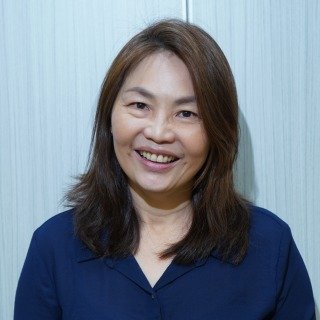
Gwen Koh
Ms Gwen Koh is a well-regarded social service practitioner who has amassed more than 25 years of frontline and supervisory practice. She holds a Bachelor degree in Social Work from the National University of Singapore and a Masters degree in Social Work from Melbourne University, Australia. Gwen is also trained in Identity Oriented Psychotrauma Theory (IoPT), EMDR, among other professional trainings.Having rose up the ranks beginning as a Youth Worker, Gwen is well-acquainted with the structure and the challenges of the local social work scene. She is currently dividing her time running her own private practice as well as serving as the Principal Social Worker in a charity running residential care, fostering service, respite care, youth outreach, adventure therapy and clinical intervention where she supervises younger colleagues. Gwen has served and supported children, adolescents and adults through individual, group, couple/marital and systemic family interventions. Gwen is adept in experiential therapeutic work with clients especially in companioning with them to unravel their strengths and resources, thereby support them towards healing, transformation and growth. Her specialties include working with individuals in dealing with anxieties, trauma, major life transitions, grief and relational challenges.
Available Funding

SkillsFuture Credit: Can be used to pay course fee fully or partially

NTUC UTAP: NTUC union members enjoy 50% unfunded course fee support, capped at $250 or $500 (aged 40 years old and above)
- Target Audience
This course is designed for care professionals, including Social Workers, Counsellors, Youth Workers and Psychologists working with complex cases or clients who have experienced traumatic stress. Those aspiring to provide trauma-sensitive care will also benefit from this course.